
Staying Connected When Someone You Love Has Dementia
If someone you love is living with dementia in New Jersey, you are carrying a lot: love, worry, grief, and everyday decisions about what is best. Many families tell us they feel torn between wanting to keep their loved one close and worrying about whether they can keep them safe, calm, and engaged at home.
You are not alone in this. Across North and Central New Jersey, families are turning to dementia-specific support, memory care, and local programs to help them stay connected while making sure their loved ones receive the daily care they need. The goal is not to replace family, but to give you the support, structure, and guidance that help you stay a daughter, son, spouse, or friend, instead of being overwhelmed as a full-time caregiver.
What Families Can Do Every Day To Help
The most helpful support does not have to be complicated. Small, predictable gestures add up and help someone living with dementia feel safer and more settled.
Create calm, predictable routines
People living with dementia often feel the world is confusing. Routines create a sense of “I know what happens next,” which lowers anxiety and reduces outbursts or withdrawal.
Helpful daily routines might include:
- Waking up and going to bed at about the same time each day
- Keeping meals around the same times, at the same seat at the table
- Using the same simple greeting when you see them, such as “Hi Mom, it is your daughter, Anna. I am here to spend time with you.”
- Keeping bathing, dressing, and medication in a familiar order
- Playing the same gentle music in the morning or during meals
New Jersey adult day programs emphasize that regular attendance helps a person with dementia adjust and feel safe. The same idea works at home and in memory care: the more predictable the day feels, the less distress your loved one is likely to experience.
Use reassurance often
Dementia brings many questions and worries. Your loved one might ask about people who have passed away, fear that they are late for work, or repeat the same concern many times. You do not need the perfect answer; you do need a calm, steady presence.
Simple phrases can help, such as:
- “You are safe. I am here with you.”
- “We have time. There is no rush.”
- “You are in New Jersey, at home, and you are cared for.”
Your tone matters more than the exact words. A soft voice, relaxed body language, and unhurried pace help your loved one feel grounded and less fearful.
How To Communicate Calmly And Reduce Confusion
Communication can feel hard when dementia changes memory, attention, and language. Many New Jersey caregiver resources highlight the same core skills: slow down, simplify, and meet your loved one where they are.
Keep language simple and supportive
Try these approaches during conversations:
- Use short sentences and talk about one idea at a time.
- Ask yes-or-no questions instead of open-ended ones. For example, “Would you like tea?” instead of “What do you want to drink?”
- Use names instead of pronouns, such as “Your son Michael called” instead of “He called.”
- Avoid arguing or trying to force your loved one to accept “reality” if it upsets them.
If your loved one insists on something that is not accurate, it can be more helpful to focus on the feeling underneath rather than correcting the facts. For example, if your dad is worried about getting to a job he retired from years ago, you might say, “You worked very hard for many years. You do not have to go in today. You have the day off, and we will stay together.”
Use visual and sensory cues
Dementia affects short-term memory, but emotional and sensory memory often remain strong. You can support communication with familiar sights, sounds, and tactile experiences:
- Point to what you are talking about instead of only using words.
- Use family photos, a favorite mug, or a beloved sweater during conversations.
- Play music from your loved one’s younger years during visits.
- Offer a gentle hand massage or hold their hand if that feels comforting to them.
These cues help make conversation feel less like a test and more like shared time.
Meaningful Ways To Stay Connected During Visits
Families often ask how to make visits feel meaningful when conversations are not as easy as before. In New Jersey memory care communities, staff focus on simple, low-stress activities that allow connection without pressure. You can use the same ideas during your visits at home or in a care setting.
Focus on shared experience, not memory tests
Try to avoid quiz-style questions such as “Do you remember who this is?” or “Do you know what day it is?” These can cause embarrassment or agitation. Instead, focus on what you can do together in the moment:
- Look through a photo album and share short stories. If your loved one does not recognize someone, you can gently fill in: “This is your sister, Maria. You used to bake together on Sundays.”
- Listen to favorite songs and sing along.
- Fold small towels together or sort simple items like buttons by color. The task itself is less important than the shared rhythm.
- Take a short walk indoors or in a secure outdoor area if they are steady enough.
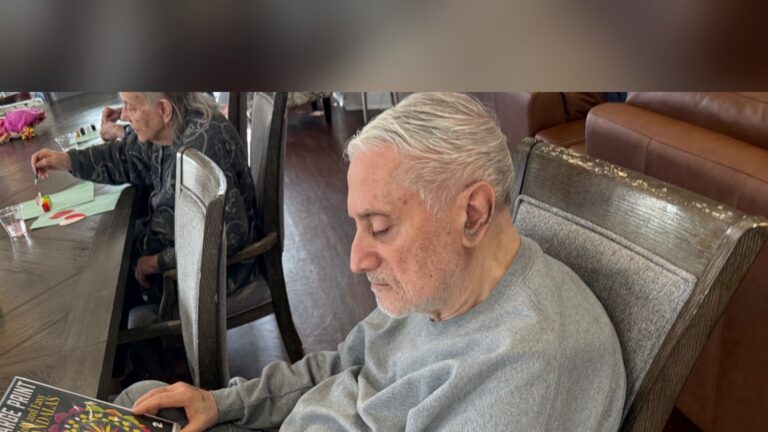
- Do a simple art or craft activity, like coloring or painting with broad brushes.
In Fox Trail’s SPARK engagement program, we adapt activities to each resident’s interests and abilities. Families can join in during visits, which often makes the time feel lighter and more natural.
Plan for shorter, calmer visits
Especially in the middle and later stages of dementia, shorter and more frequent visits can be easier than long, overwhelming ones. Try to schedule your visits at times of day when your loved one tends to be more alert and relaxed. Many families find late mornings or early afternoons work well.
If your loved one lives in memory care, ask the team for guidance on the best visiting times and how your visits can fit naturally into their daily rhythm. That type of coordination helps your loved one stay settled, and it helps you avoid times when they might be more tired or prone to confusion.
Why Consistency Helps Someone Living With Dementia
Across New Jersey dementia programs, one message is clear: consistency reduces confusion. This is true for daily routines, communication style, and family involvement.
Familiar faces and patterns reduce stress
When the same people visit at roughly the same times and follow similar patterns, your loved one begins to feel that life is more predictable. That might look like:
- You always greeting them the same way and re-introducing yourself if needed.
- Visiting on the same days of the week when possible.
- Bringing the same favorite snack or item.
- Ending visits with the same comforting goodbye phrase, such as “I will see you Wednesday. You are safe and cared for.”
New Jersey adult day services point out that it often takes time for someone with dementia to get used to a new setting. Regular attendance and predictable contact help them settle in. The same holds true when a loved one moves to memory care. Early on, it can help to keep visits gentle and consistent rather than long and sporadic.
Consistency for families matters too
Routines are not only for the person living with dementia; they also protect caregivers. Setting certain “care hours” and “rest hours” for yourself, planning regular respite breaks, and keeping a rhythm of support from family or professionals can reduce burnout and help you show up with more patience.
If your loved one has symptoms such as hallucinations, delusions, or aggression, having consistent strategies also helps. Fox Trail’s blog has articles such as managing hallucinations and delusions and gentle ways to calm aggression that New Jersey families often find reassuring.
New Jersey Dementia Support Resources For Families
Many New Jersey families try to carry everything alone for far too long. There is strong local support designed just for you as a caregiver.
Helplines and education
Statewide organizations provide no-cost emotional support, information, and classes:
- Alzheimer’s New Jersey offers education programs, support groups, and local referrals focused on the needs of New Jersey families.
- The Alzheimer’s Association Greater New Jersey Chapter runs a 24/7 Helpline at 800-272-3900, where you can talk with someone about behavior changes, communication challenges, and care decisions at any time.
- Caregiver coalitions in parts of North and Central New Jersey offer phone-based consultations and workshops that help with problem-solving and stress management.
These services are not only about information; they are about having a place to bring your fears, grief, and questions so you can return to your loved one feeling steadier.
Care navigation and Medicare-supported programs
Some New Jersey organizations now participate in programs that provide a dedicated dementia care navigator, 24/7 phone support, and structured caregiver education, often covered under Medicare Part B. These models are designed to help families manage symptoms, plan for the future, and coordinate medical and daily care. When you understand what to expect and how to respond, visits tend to feel less tense and more connecting.
Articles to support your emotional journey
Dementia caregiving brings complex emotions. Many families feel they are mourning a loved one who is still physically present. Our article on anticipatory grief speaks directly to this experience and offers ways to cope while staying present in the relationship you still have.
How Memory Care In New Jersey Helps Families Feel Informed And Included
One of the biggest fears families share is that moving a loved one to memory care means they have failed or are “giving up”. The reality is that thoughtful memory care can protect your loved one’s safety and dignity while giving you back your role as family, not just caregiver.
What memory care provides that home often cannot
New Jersey memory care communities are built from the ground up for people living with dementia. At Fox Trail Memory Care Living, that includes:
- Intimate residential homes with a small number of residents, which allows for truly personalized attention.
- Secure environments so you do not have to worry about wandering or accidents during your visit.
- Staff trained in all stages of dementia, Alzheimer’s disease, Parkinson’s disease, and related conditions.
- Structured daily routines that support orientation, reduce sundowning, and encourage restful sleep.
- Home-cooked meals, housekeeping, and laundry handled for you so your time together can focus on connection, not chores.
- Our SPARK program offering tailored engagement, and our HOPE program bringing medical and psychiatric support on site.
Families frequently tell us that after their loved one settles into memory care, visits feel more like visits again. They can sit, talk, join an activity, or just hold hands instead of racing through a list of caregiving tasks.
Your role does not disappear; it shifts
A thoughtful memory care team wants and needs your involvement. At Fox Trail, we invite families to:
- Share life stories, routines, and preferences so we can shape care around the person, not the diagnosis.
- Join care plan meetings and stay updated as needs change.
- Visit often and participate in activities or everyday moments like meals.
- Use tools like secure family update platforms for real-time communication when you cannot be there in person.
We do not replace you. We become part of your care team so you can be present in the ways that only family can be.
If you are wondering what day-to-day life in memory care might look like, you may find our articles “A Day in the Life: What Residents Experience in Our Memory Care Program” and “How Personalized Memory Care Makes a Difference” reassuring. Many families also relate to “What I Wish I Knew Before Moving Dad into Memory Care”.
Frequently Asked Questions From New Jersey Families
How often should family visit someone with dementia?
There is no single right answer. In general, more frequent, shorter visits tend to be easier than long, rare ones. Many families in North and Central New Jersey aim for several visits a week or whatever schedule fits their work, health, and distance. The key is consistency. Talk with your loved one’s care team about what seems to help them feel settled rather than overstimulated.
What should we talk about during visits?
Everyday topics work best. You can talk about the weather, small updates from family, favorite memories, music, or something simple you are looking forward to, like your next visit. Try not to quiz your loved one on dates or names. If they are quiet, just sitting together, holding hands, or sharing music can be meaningful.
How can I help my loved one feel calm during a bad moment?
Softly say their name, offer eye contact at their level, and use a slow, gentle voice. Remind them that they are safe and you are with them. If they are in memory care, ask staff which calming strategies work best for them, such as a weighted blanket, favorite song, or a walk in a secure hallway or garden. For more guidance, our article on gentle de-escalation for aggression in dementia may be helpful.
How do I know if it is time to consider memory care?
Warning signs include repeated safety issues, wandering, frequent falls, missed medications, severe sleep disruption, and caregiver exhaustion. Families also reach out when they feel their relationship has turned into constant crisis management. Many families later say they wish they had moved sooner, once they see their loved one more settled in a supportive, structured environment.
You Do Not Have To Do This Alone
Supporting a loved one with dementia in New Jersey is both an act of deep love and a heavy responsibility. You deserve support, information, and a care team that sees your loved one as a whole person with a rich life story.
If you are starting to wonder whether home is still the safest or most supportive option, or if you simply want to understand what memory care could look like for your family, Fox Trail Memory Care Living is here to help. Our intimate New Jersey communities, SPARK engagement program, and HOPE medical services are built around routine, safety, and personal connection.
Call Fox Trail Memory Care Living at 1-855-5MEMORY or visit our website to schedule a tour at one of our North and Central New Jersey locations. We would be honored to talk through your questions, show you what daily life looks like in our homes, and help you find the right next step for your loved one and your family.