
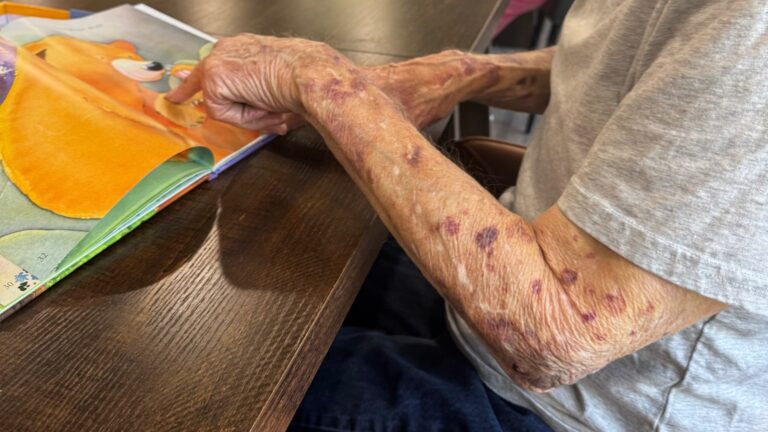
“Do we really have to treat that spot right now?”
If you care for an older parent in New Jersey, you may have had this experience: you notice a rough or red patch on their face, scalp, or hands. You search online and see the term “actinic keratosis.” Very quickly, the internet starts talking about skin cancer risk and urges treatment.
But here is the calmer truth: many actinic keratoses are more annoying than dangerous. They are signs of sun damage, not a crisis. In many cases, it is safe to watch them over time, as long as you know which warning signs mean it is time to see a dermatologist.
This is especially important for families caring for a loved one with memory loss. You are already juggling medical appointments, daily care, and emotional decisions. The last thing you need is another urgent alarm that turns out not to be urgent at all.
This guide is meant to lower the temperature, not raise it. You will learn what actinic keratoses are, when “watchful waiting” can be reasonable, which changes mean “please get this checked,” and how to talk with doctors so you are not pushed toward treatment before you are ready.
What actinic keratoses are – in plain language
Actinic keratoses, often shortened to AKs, are small areas of sun-damaged skin. They are not skin cancer. They are places where the top layer of skin has been hurt by years of sunlight, especially UV rays.
Many New Jersey seniors develop them on areas that have seen a lot of sun over the years:
- Forehead, cheeks, and nose
- Bald scalp
- Ears
- Backs of the hands and forearms
- Lower legs
- Lips, especially the lower lip
AKs are sometimes called “solar keratoses” because they are so tied to sunlight.
What they usually look and feel like
Families often describe AKs this way:
- Rough, dry, or scaly patch that feels like sandpaper
- Small, usually less than an inch across
- Flat or slightly raised bump
- Skin-colored, pink, red, or light brown
- Sometimes crusty or flaky, occasionally like a thin wart
Many actinic keratoses do not hurt. Your loved one may not complain about them at all. You might only notice them when you touch the area and feel a persistent rough spot that never really goes away.
They also tend to grow slowly. They can stay the same size for months or years, or come and go. That slow, stubborn behavior can be frustrating, but it is also exactly why a calm, watch-and-wait approach is often safe.
How risky are these spots, really?
This is where many families feel their anxiety rise. You hear the words “precancerous” and understandably think, “Does that mean this will become cancer if we do nothing?” The short answer is that each individual actinic keratosis has a small chance of turning into a skin cancer called squamous cell carcinoma.
Most will never do that. Many remain unchanged. Some even fade or disappear over time. That is why leading dermatology guidance does not say every AK must be removed immediately. Instead, it recommends individual decisions based on the spot’s behavior and the person’s overall risk.
Here is what that means for you as a family member:
- Finding a rough, quiet spot with no pain, no bleeding, no rapid growth often does not require emergency treatment.
- Choosing to observe those quiet spots is a valid, medically supported option.
- What matters most is knowing when a spot has changed in a way that could signal higher risk.
When observation may be reasonable
If your loved one has a small, stable, sandpaper-like patch that:
- Is not painful
- Is not bleeding
- Has not changed quickly
- Is not forming a thick, crusty sore
then a calm “wait and watch” plan is usually appropriate, especially if they:
- Already see a dermatologist regularly
- Have transportation challenges or medical fatigue that make extra procedures stressful
- Feel anxious about “one more treatment”
For many New Jersey families, this gentler approach is a relief. It means you do not have to rush into freezing, scraping, or medicated creams right away. You can choose, together with your medical team, whether to monitor the spot or treat it now.
Observation can be especially reasonable when:
- Your loved one has several AKs that all look about the same and none are painful.
- You are focused on comfort, routine, and avoiding extra visits that tire them out.
- They already have many other medical appointments, and adding another procedure feels overwhelming.
In those circumstances, choosing to watch and wait can be the kinder choice.
Warning signs that need a dermatologist
On the other hand, there are clear changes that mean a spot should be checked soon. Actinic keratoses can progress, and while the risk per spot is low, it is not zero. You do not need to panic, but you do need to pay attention.
If your loved one has a known or suspected actinic keratosis and you see any of these changes, it is time to call a dermatologist:
- The spot starts to bleed without clear injury.
- They report pain, burning, or tenderness in the area.
- The patch thickens, becomes a raised, firm bump, or looks more like a sore that will not heal.
- It begins to grow more quickly over weeks to months.
- The edges become irregular or the color changes noticeably.
These changes do not always mean cancer, but they are enough to justify a full medical evaluation, sometimes a biopsy, and often treatment.
As a caregiver, you do not need to guess. You can simply say, “This rough red patch has started to bleed,” or “This spot on Mom’s scalp hurts when I wash her hair.” Those are clear, concrete reasons to ask for an appointment.
Common treatment options when a lesion does need attention
When a dermatologist recommends treating an actinic keratosis, they may suggest:
- Cryotherapy – Quickly freezing the spot with liquid nitrogen so it blisters and peels off. This is one of the most common options.
- Topical creams – Prescription creams that your loved one applies at home over several weeks to treat both visible spots and “field damage” in a sun-exposed area.
- Photodynamic therapy – Light-based treatment after applying a special medicine to the skin, usually for larger or more numerous areas.
- Minor surgical removal or scraping – Sometimes used when a spot has changed enough to raise concern for squamous cell carcinoma.
These treatments are usually done in the dermatologist’s office. They are rarely urgent emergencies, and they are typically scheduled during normal visit times.
The key for families in North and Central New Jersey is this: you do not have to demand aggressive action. You just need to calmly describe the changes you see, and ask, “Does this mean we should treat it?” Then work with the medical team on timing and approach.
How families can safely monitor spots at home
Caring for a loved one with memory loss already takes so much of your heart. Adding “watchful waiting” for actinic keratoses should not add more stress. With a few simple habits, you can keep an eye on these spots without turning every one into an emergency.
Helpful steps include:
- Create a simple skin map – Note where each rough patch is: right temple, top of left ear, center of scalp. Take clear photos on your phone for reference.
- Check once a month – During bathing, dressing, or hair washing, lightly run your fingers over known spots. Notice if anything feels thicker, more raised, or tender.
- Ask your loved one – If they are able to share, ask, “Does this spot hurt or itch?” Write down their answer so you can share it with the doctor.
- Track changes – If you see bleeding, a new scab, or quick growth, record the date and snap a picture.
This information helps your dermatologist understand what is happening and supports a clear decision about whether a biopsy or treatment is needed.
Why families caring for someone with dementia feel this so deeply
If your loved one lives with Alzheimer’s or another form of dementia, you may already be reading about medical topics long before a doctor brings them up. That can feel like one more way control is slipping.
At Fox Trail Memory Care, we speak every day with New Jersey families who are trying to sort out what really needs urgent treatment and what can be watched. Actinic keratoses fall firmly in the “you have options” category. The calm, factual guidance is:
- Many AKs are more bothersome to look at than harmful to health.
- Observation is medically acceptable for many spots, as long as bleeding, pain, and rapid growth are not present.
- Once those changes appear, a visit with a dermatologist is the right next step.
That is why understanding AKs can lower some of the fear around skin “precancer.” It allows families to make choices based on their loved one’s comfort and priorities, not fear alone.
Sun protection and preventing new spots
While you are deciding how to handle current skin spots, you can also take small, practical steps to protect your loved one’s skin going forward.
- Use broad-spectrum sunscreen daily on the face, ears, neck, and hands.
- Choose wide-brimmed hats for outdoor time, especially for those with thinning hair.
- Encourage time in the shade during midday hours when possible.
- Cover arms and legs with light, breathable fabrics during outdoor visits or outings.
For many New Jersey families, this kind of routine sun care becomes part of the caregiving rhythm, just like helping with medications or meals.
Talking with doctors about actinic keratoses
It can feel intimidating to question a doctor’s recommendation. You do not have to argue. You can simply ask curious, specific questions. For example:
- “If this rough patch is not painful, is it safe to just watch it for now?”
- “What changes should we watch for that mean it is time to treat or biopsy this spot?”
- “If we choose to wait, how often do you recommend we recheck the area?”
These questions are calm, respectful, and focused. They support shared decision making instead of rushed, one-sided choices.
As a caregiver, you can also keep notes from these conversations. This helps you remember what was said and gives you something concrete to revisit later if you feel unsure.
Supporting your loved one beyond the skin
Skin is only one piece of your loved one’s health. Many New Jersey families are dealing with speech changes, swallowing troubles, mood shifts, or hallucinations related to dementia or Parkinson’s disease. If you are already paying close attention to these concerns, you are doing thoughtful, loving work.
You may find our other caregiver resources helpful as you walk through these issues, including:
- The Hearing Loss–Dementia Connection: What New Research Reveals For New Jersey Families
- How to Calm Aggression in a Loved One with Dementia: Gentle De-escalation for New Jersey Families
- Dysphagia and Dementia: Caregiver Guide to Helping a Loved One Who Struggles to Swallow
- Managing Hallucinations and Delusions in Lewy Body Dementia and Alzheimer’s: A Caregiver Guide for New Jersey Families
Actinic keratoses are a reminder that your loved one’s body has been through years of living. Understanding them is one more way you are honoring their story and advocating for the care they deserve.
How Fox Trail supports New Jersey families making medical decisions
At Fox Trail Memory Care, we know how heavy medical decisions can feel. You are not just deciding about a skin spot; you are weighing your loved one’s comfort, dignity, and quality of life.
Our intimate residential homes in North and Central New Jersey are designed so residents feel seen, known, and supported. We work closely with families to understand each person’s full health picture, including skin concerns like actinic keratoses, hearing changes, swallowing issues, and more.
Through our SPARK engagement program and our HOPE on-site medical services, our teams monitor subtle changes, communicate clearly with families, and help coordinate specialist care when needed. We want you to feel that you are not carrying these questions alone.
If you are starting to wonder whether your loved one’s current environment at home is still safe, manageable, or fair to you as a caregiver, it may be time to explore memory care. Many families tell us they wish they had made the move sooner, especially once they experience what a structured, supportive day can look like.
You can read more about daily life in our communities in A Day in the Life: What Residents Experience in Our Memory Care Program and how we shape care around each person in How Personalized Memory Care Makes a Difference.
Next steps for New Jersey families
If you are caring for someone with memory loss and you are also trying to sort out medical advice around actinic keratoses, you do not have to do it on your own.
- Start by noticing and documenting any skin changes, especially bleeding, pain, or rapid growth.
- Talk with your loved one’s doctor about whether observation is an option for any quiet, nonpainful AKs.
- If medical visits and procedures are becoming too much for your family or your loved one, consider whether a structured memory care setting might bring everyone more peace.
Fox Trail Memory Care serves families across North and Central New Jersey who are ready for consistent routines, 24/7 support, and compassionate eyes on their loved one’s health. Our homes are small on purpose so your loved one is known by name, not room number.
If you would like to talk through what you are seeing with your loved one’s skin or overall health, and whether memory care might help, we are here to listen. Call Fox Trail Memory Care at 1-855-5MEMORY or visit our website to schedule a tour and meet our team.
You are not overreacting. You are advocating. And you do not have to do it alone.