
If you have started researching memory loss for a parent or spouse, you may have come across the term explicit memory. It sounds clinical, but the idea behind it is easy to picture once you break it down, and understanding it can help you make sense of the changes you are noticing at home.
A Plain Language Definition of Explicit Memory
Explicit memory is the kind of memory you have to think about on purpose. It is the conscious recall of facts and personal experiences, things like a grandchild’s name, what happened at last week’s family dinner, or the date of an anniversary. Researchers sometimes split it into two types: remembering personal events, like a trip to the shore, and remembering general facts, like knowing what day trash pickup happens.
This is different from the kind of memory that lets you do things without thinking, like riding a bike or humming an old song. That type tends to stay more intact even as explicit memory changes, which is part of why familiar routines and music can still bring comfort even when names and dates become harder to hold onto.
Explicit memory relies heavily on parts of the brain that are affected earlier by Alzheimer’s disease, which is one reason families notice this particular type of forgetting before other changes appear. Knowing that this is a specific, recognizable pattern, rather than a sign that a loved one is simply distracted or not trying, can bring a strange kind of relief. It gives families language for what they are already seeing.
Everyday Examples Families Will Recognize
Explicit memory shows up constantly in daily life, often in ways we do not notice until they start to slip. A few common examples:
- Recalling a neighbor’s name when they wave from across the yard
- Remembering a grandchild’s birthday without a reminder
- Knowing where the car keys were left five minutes ago
- Following a familiar recipe step by step
- Recalling what was discussed earlier in a conversation
For most people, these moments happen without effort. When a loved one begins to hesitate, ask the same question twice, or seem unsure about details they used to know easily, families often notice explicit memory changes before they know what to call them. This is often what prompts a first search online, or a first conversation with a sibling about what everyone has been noticing separately but had not said out loud.
How Explicit Memory Can Shift with Alzheimer’s or Dementia
For someone living with Alzheimer’s disease or another form of dementia, explicit memory is often one of the first areas where changes appear. This does not mean every memory disappears at once. Many families notice that a loved one can still recall a favorite song from decades ago or feel at ease in a familiar chair, even while struggling to remember what happened that morning.
Common patterns families in New Jersey describe to our team include:
- Forgetting recent conversations, while older memories stay clearer
- Trouble recognizing a familiar face or place right away
- Needing extra steps or cues to complete a routine task, like getting dressed
- Repeating questions because the earlier answer did not stick
These shifts can feel confusing and painful to witness, especially when a loved one still has their sense of humor, their warmth, or their opinions fully intact. That is an important thing to hold onto. Explicit memory changing does not mean a person’s identity is gone. It means the way they access certain information is changing, and the people around them can adjust to meet them where they are.
Families sometimes describe this as a strange kind of grief, mourning pieces of a shared history even while the person is still very much present. That reaction is normal, and it is one reason family education is such a central part of good memory care. Learning to communicate in a way that does not rely on a loved one’s explicit recall, using shorter sentences, visual cues, and gentle reminders, can lower frustration on both sides. Instead of asking a direct question that requires precise recall, such as what did you have for lunch, families often find it gentler to offer a comment instead, such as that soup smelled wonderful earlier.
How Fox Trail Builds Daily Support Around These Changes
At Fox Trail Memory Care Living, our approach starts from the idea that memory support should protect a person’s sense of self, not just manage a list of symptoms. Our communities across North and Central New Jersey are built around routines and environments that reduce the pressure on explicit memory, so residents are not constantly asked to recall information that has become hard to reach.
A few ways this shows up day to day:
- Structured, predictable routines. When mornings, meals, and evenings follow a consistent rhythm, residents rely less on remembering a schedule and more on familiar cues built into the environment itself. You can read more about how this works in our post on daily routines for dementia.
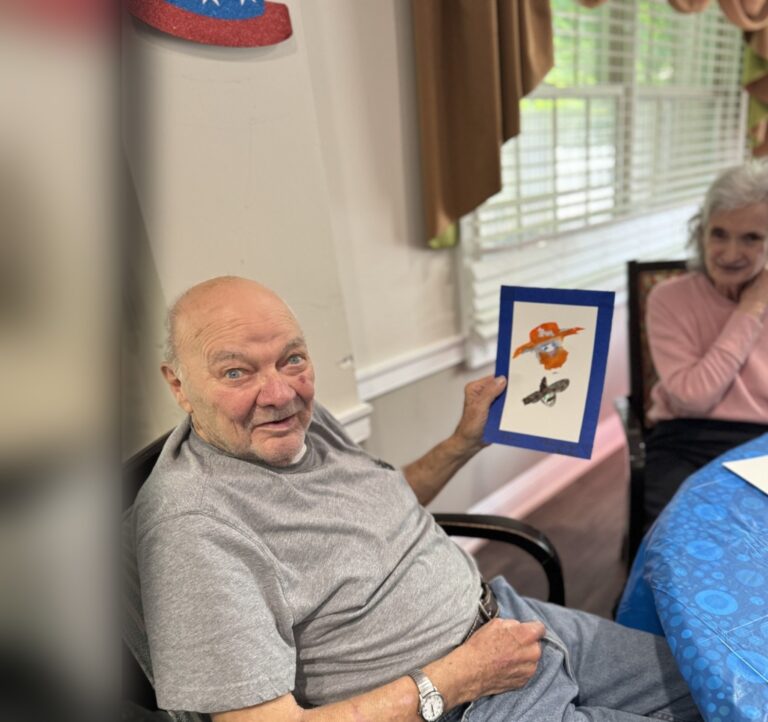
- SPARK Memory Programming. Our SPARK activities lean on music, art, movement, and reminiscence, forms of engagement that do not require sharp explicit recall to bring joy or connection. A resident does not need to remember the words to a song to feel something when it plays. Learn more in our piece on the SPARK program.
- The HOPE Program. Our on-site medical support, backed by dedicated Medical and Psychiatric Directors, means changes in memory or behavior are monitored closely and care plans are adjusted as needs shift. More detail is available in our article on HOPE on-site medical care.
- Medication management. Our team oversees medication timing directly, so nothing depends on a resident remembering when a dose is due.
- Personalized care plans. Every resident’s care plan is built around their personal history, preferences, and communication style, not just their diagnosis. That means staff learn what makes someone who they are, not only what they may be forgetting.
- Housekeeping and daily meals. Predictable meals and a well kept, familiar space reduce the number of decisions and recollections a resident has to manage on their own each day.
- Family education and support. We work with families to share practical ways to communicate that meet a loved one where their memory currently is, rather than testing what they can recall.
None of this is about pretending memory changes are not happening. It is about building a day that does not depend on a resident’s explicit memory working perfectly in order to feel calm, connected, and dignified. Many of our residents continue to enjoy conversation, laughter, and personal expression well after certain kinds of recall have become difficult, because so much of connection lives outside of remembering dates and details.
Respite care can also be part of this picture. Families who are still caring for a loved one at home sometimes use a short stay in one of our communities to see, firsthand, how these routines and programs support a person day to day, before making a longer term decision.
You Are Not Giving Up by Asking for Help
If you are noticing these changes in a parent or spouse, you are likely feeling a mix of worry, grief, and uncertainty about what comes next. That is a normal response to watching someone you love change in front of you. Reaching out for support does not mean stepping away from them. It means giving them a setting built specifically to support the kind of memory challenges they are facing, while you remain fully present as their family, not their full-time caregiver.
Fox Trail Memory Care Living serves families throughout North and Central New Jersey, and we are always glad to talk through what you are seeing at home. If you would like to learn more about how our communities support residents living with Alzheimer’s, dementia, or Parkinson’s disease, we invite you to schedule a tour, or call 1-855-5MEMORY to talk with our team.