
When families ask how reading improves memory for someone living with dementia, they are usually not asking for a scientific paper. They are asking something much more personal: is there something we can still do together that feels good and maybe helps a little. That question deserves a warm, honest answer.
Reading will not reverse dementia and no one should expect it to. But shared reading and storytelling can support engagement, spark conversation, and create moments of connection that matter just as much as any measurable outcome. At Fox Trail Memory Care Living, we see this every day through our SPARK Memory Programming, and we want to share what actually works for families in North and Central New Jersey.
What People Usually Mean When They Ask This Question
Most families searching for information on reading and memory are hoping for one of two things. Either they want to know if reading can slow decline, or they are looking for an activity to do with a parent or spouse who used to love books but now struggles to follow a story.
The honest answer sits somewhere in between those two hopes. Reading is a mental activity that keeps language centers engaged and gives the brain something familiar to hold onto. It is not a treatment and it will not diagnose or cure anything. What it can do is support quality of life, offer a sense of purpose, and give families a comfortable way to spend time together that does not depend on memory working perfectly.
Some research has looked at how often older adults read and whether that habit relates to cognitive health over time. Studies following large groups of older adults have found that people who read regularly, even just once a week, tended to show lower rates of cognitive decline over many years compared to those who read rarely. None of this suggests reading prevents or cures dementia. It points to reading as one of several habits, alongside movement, social connection, and rest, that seem to support brain health over the long run. For someone already living with dementia, the value of reading shifts from prevention toward comfort, identity, and connection.
If your loved one was a lifelong reader, a former teacher, or someone who always had a book on the nightstand, reintroducing stories in a low pressure way can feel like reconnecting with who they have always been, even as their needs change. That reconnection, more than any measurable improvement, is usually what families are really hoping to find.
How Reading Activities Can Support Engagement and Connection
You do not need a novel or a strict lesson plan. Some of the most meaningful reading moments in memory care are short and casual, built around comfort rather than performance.
- Reading a short story or poem aloud, five to ten minutes at a time, with pauses to talk about what is happening.
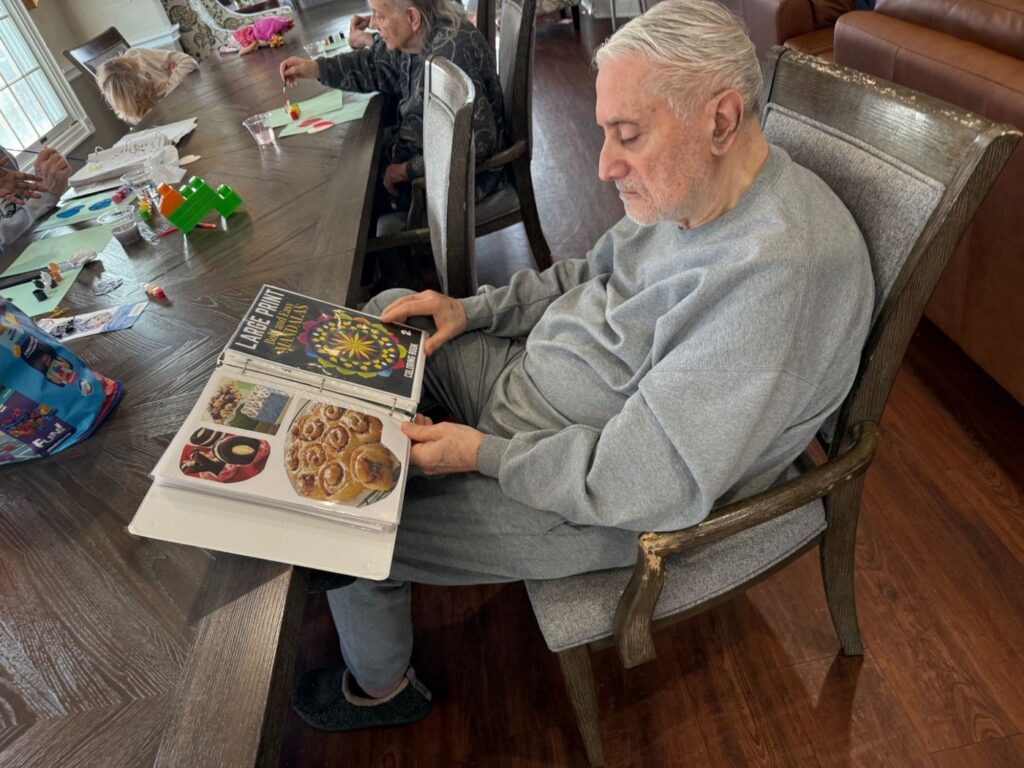
- Looking through a picture book or a family photo album together, letting images carry the conversation more than text does.
- Sharing a newspaper article about a favorite hobby, sport, or topic that has always mattered to your loved one.
- Repeating a familiar saying or proverb and talking about what it means, which works well even for someone in later stages of dementia.
- Keeping a small notebook with a one line summary of each story, so the next visit has something familiar to return to.
Large print, clear pictures, and short sessions all help reduce frustration. The goal is not to test recall or push toward a right answer. The goal is a shared moment that feels comfortable and enjoyable, whether or not the details are remembered afterward. If you are looking for more ideas along these lines, our post on meaningful visit ideas for loved ones with dementia covers other activities that pair well with reading.
It also helps to think about pacing across a week rather than a single visit. A resident who enjoys a short story on Monday might prefer flipping through a photo album on Wednesday and listening to a favorite poem read aloud on Friday. Rotating formats keeps the activity fresh and lets you notice what your loved one responds to best on any given day.
How Fox Trail’s SPARK Memory Programming Uses Storytelling and Reading in Daily Life
Storytelling and reminiscence are built into our SPARK Memory Programming as one of several personalized pillars, alongside art, music, movement, and sensory experiences. Rather than treating reading as a separate task on a calendar, our teams weave it into daily life in ways that fit each resident’s history and preferences.
A former teacher might help lead a small group reading circle. Someone who always read the sports section might get a weekly article to discuss over coffee. Residents receive personalized memory books that combine familiar photographs with short captions, giving them something they can revisit on their own or with staff and family throughout the day.
We also set aside time for a relaxed literature lounge, where residents can look through large print books, magazines, and articles chosen with their interests in mind. Staff members are there to encourage conversation, not to quiz anyone on details. The focus stays on comfort, familiarity, and connection, which is the same philosophy that runs through every piece of SPARK programming.
You can read more about how these activities are personalized in our post on Fox Trail’s SPARK Program and tailored activities. SPARK works alongside our HOPE Program, which brings on site medical support to residents, so families know engagement and health needs are being addressed together, not separately.
Easy Ways Families Can Bring Books or Stories Into a Visit
Family visits are some of the best opportunities to bring reading into your loved one’s routine, and it does not take much preparation to make it meaningful.
- Bring a short story with large print and read a few pages together, choosing something with a familiar theme.
- Put together a small photo story with recent family pictures and a short caption under each one, which gives you both something visual to talk through.
- Use a tablet with a read aloud feature so your loved one can listen along while looking at the words or pictures.
- Choose an article tied to a hobby they have always loved, whether that is gardening, a favorite sports team, or a beloved television show.
- Leave a note about your next visit, so there is something familiar to look forward to between visits.
Consistency matters more than length. A short reading routine done regularly during visits can become something your loved one looks forward to, even if they do not remember the details of last week’s story. For more ways to structure visits around comfort and familiarity, see our guide on daily routines for dementia and how structure supports seniors.
A Realistic, Hopeful Way to Think About Reading
Reading will not stop dementia from progressing, and no memory care community should ever suggest otherwise. What it can offer is a low pressure, meaningful way to stay connected, to spark a smile, and to hold onto pieces of your loved one’s identity through the stories and topics they have always cared about.
At Fox Trail Memory Care Living, our SPARK Memory Programming is built around exactly this kind of personalized engagement, treating each resident as an individual with their own history and interests rather than applying a general routine to everyone. Our intimate residential homes, with a maximum of fifteen residents, make it possible for our teams to truly know what each person enjoys reading about and how they like to spend an afternoon.
If you are exploring memory care options in North or Central New Jersey and want to see how storytelling and reading fit into daily life at Fox Trail, we invite you to schedule a tour and see our SPARK programming in action, or call 1-855-5MEMORY to talk with our team.